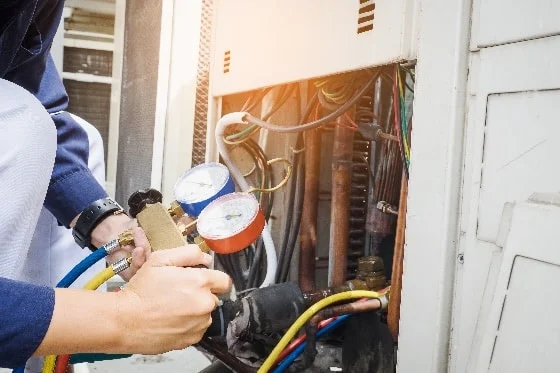

Yes — a heat pump can either replace your furnace entirely or work alongside it in what’s called a dual-fuel or hybrid system. The right setup depends on your climate, your furnace’s age, and your priorities for efficiency, cost, and backup performance during the coldest days.
Two ways to set it up
- Heat pump alone — A modern cold-climate heat pump can fully heat most Inland Northwest homes down to single-digit temperatures, with electric backup for rare cold snaps.
- Hybrid (dual-fuel) system — Heat pump handles most heating needs, gas furnace kicks in only on the coldest days. Best of both worlds for efficiency and reliability.
Dual-fuel often delivers the lowest annual operating cost in our region, especially with rising electric rates and existing high-efficiency furnaces. Our team designs both options as part of heat pump installation, and we can quote a matching furnace replacement if needed.