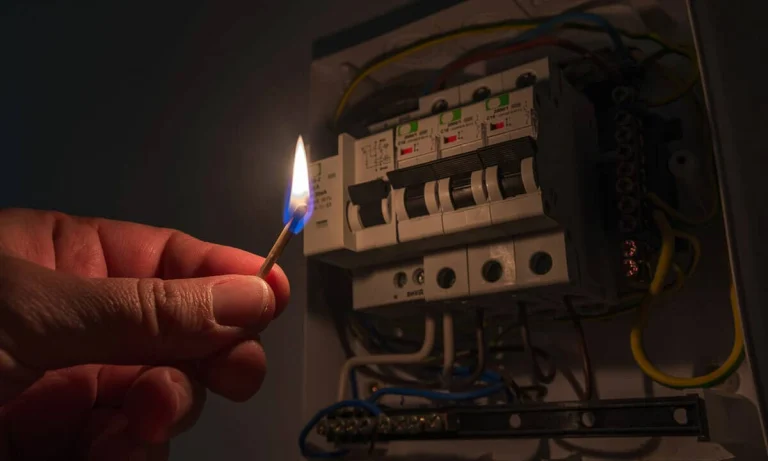

A fuse box and a circuit breaker panel both protect circuits from overload, but they do it differently. A fuse box uses one-time-use fuses that burn out and have to be replaced when a circuit overloads. A circuit breaker panel uses resettable switches that flip off when overloaded and can be turned back on — no replacement parts needed.
Why most homes upgrade to breakers
- Breakers reset — no replacement fuses to buy or store
- Breakers can be rated for higher amperage modern homes need
- AFCI and GFCI breaker options add code-required safety
- Insurance companies sometimes charge more for fuse-box homes
- Fuse boxes are usually undersized for today’s appliance loads
If you still have a fuse box, an upgrade is usually a worthwhile safety and capacity investment. Our licensed electricians handle full electrical panel upgrades and circuit breaker service. Financing is available for major panel work.