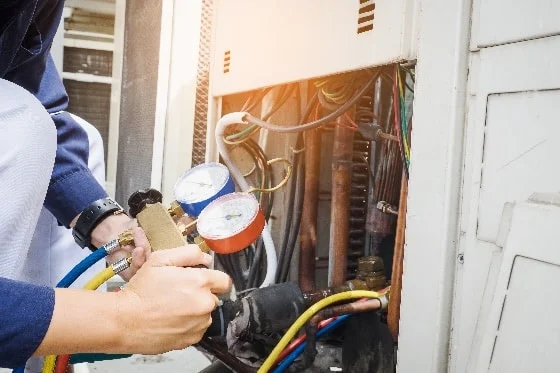

A heat pump is a single piece of equipment that both heats and cools your home by moving heat instead of generating it. In summer it works like a central air conditioner — pulling heat out of indoor air and dumping it outside. In winter it reverses, extracting heat from outdoor air (even when it feels cold) and bringing it inside.
How the cycle works
- Refrigerant absorbs heat from one space and releases it in another
- A reversing valve lets the same equipment cool or heat on demand
- Variable-speed compressors fine-tune output for steady comfort
- Air-source units exchange heat with outdoor air; ground-source units exchange with the soil
Because heat pumps move heat rather than burning fuel, they typically deliver three to four units of heat for every unit of electricity used — well above the efficiency of any furnace. Our team designs and installs heat pump systems, including ductless setups for homes without ducts.