What Is an Overloaded Electrical Circuit?
Think of each circuit in your home like a road. It’s designed to handle a certain amount of “traffic” (electrical demand). When too many appliances use the same circuit at once, the energy load stacks up. A breaker overload is when your breaker recognizes the increased demand, cuts the power, and prevents the wiring in your walls from overheating.
Spokane homes, especially those built 20+ years ago, tend to have small panels, older wiring, and rooms that share circuits. Add winter space heaters, portable ACs in summer, heavy kitchen appliances, or lots of electronics, and an overload happens fast.
Many homeowners confuse overloads with other electrical issues. Here’s the difference, simply:
- Overload: too much demand. Breaker usually trips during or after heavy use.
- Short circuit: wires touching where they shouldn’t. Instant, repeated tripping.
- Ground fault: electricity taking an unsafe path (often moisture-related). Also trips instantly.
Knowing which one you’re dealing with helps you respond safely.
How to Know It’s an Electrical Circuit Overload (And Not Something More Serious)
An overloaded circuit usually shows at least one of these clues:
- Breaker overload is tripped when multiple appliances run
- Lights dim when something switches on
- Warm or buzzing outlets
- Outlets that suddenly stop working
- Scorched or discolored wall plates
- Heavy use of power strips or extension cords in one area
Stop right away if you notice a burning smell, crackling sound, or heat at the electrical panel. Those are signs of a deeper fault, not a simple electrical circuit overload.
Immediate Steps: How to Fix Overloaded Circuits
Start with the simplest, safest steps:
- Reduce the load on the circuit. Unplug items in the room or area that went dead.
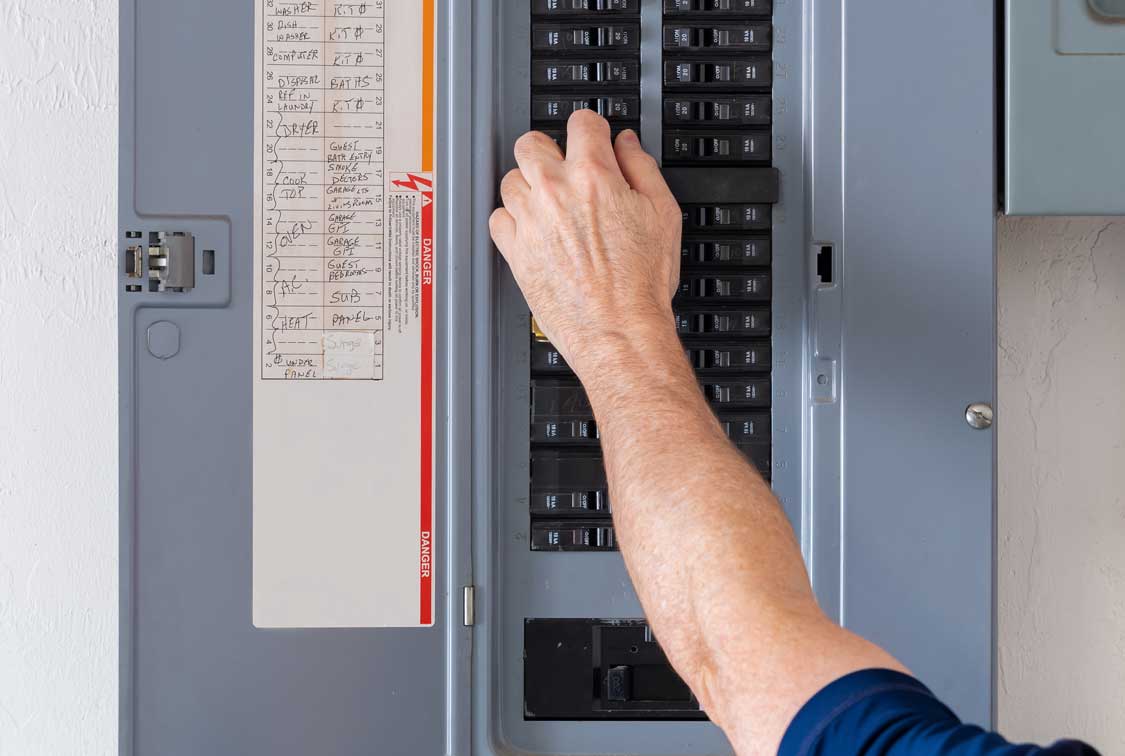
- Reset the breaker — once. Push it fully to OFF, then back to ON. A breaker that instantly re-trips is telling you something important: stop and call a pro.
- Add power back slowly. Plug things in one at a time. You’ll quickly spot the appliance or combination that’s overloading the circuit.
- Spread out usage. Move heavy-draw devices — space heaters, microwaves, vacuums — to outlets in different rooms so you’re not stacking demand on one circuit.
When you follow these steps and the overload stops, you’ve solved the problem. If the breaker keeps tripping? You likely have wiring damage, a bad breaker, or an undersized circuit—and those aren’t DIY repairs.
DIY Fixes That Help Prevent Future Overloads
You don’t need tools to keep overloads at bay. Just use your circuits wisely:
- Run one big appliance at a time on bedroom and living room circuits
- Replace old or overloaded power strips
- Retire frayed cords and loose plugs
- Avoid using space heaters on shared circuits
- Use kitchen and bathroom outlets (usually dedicated circuits) for high-draw devices
Important: Never open the electrical panel. Never “upsize” a breaker to stop tripping.
That’s one of the fastest ways to cause hidden wire damage or fire risk.
When a Circuit Overload Isn’t the Real Problem
If the breaker still trips, even after reducing load, you’re not dealing with a classic overload. Spokane’s older neighborhoods often hide deeper issues:
- Wiring too small for today’s appliances
- Breakers wearing out and nuisance-tripping
- Loose connections behind outlets
- Overcrowded electrical panels
- Rooms sharing a single circuit
- DIY wiring from previous homeowners
When these issues show up, it’s time for a licensed electrician. No amount of unplugging or rearranging will fix a wiring or panel problem.
Preventing Overloads in Spokane and Northern Idaho
Our winters mean space heaters are everywhere. Summers bring portable ACs. Both are notorious overload offenders.
Here’s how to stay ahead:
- Avoid running multiple high-draw appliances on one circuit
- Use dedicated circuits whenever possible
- Install new outlets in areas that consistently overload
- Get your panel checked if it’s older or undersized
- Schedule routine electrical maintenance
Regular inspections catch loose connections, panel wear, and wiring problems long before they cause headaches—or hazards.
Professional Spokane Electricians From Mainstream
When you’re tired of juggling appliances or guessing what’s safe, Mainstream has your back. Our licensed electricians provide solutions designed around Spokane’s homes:
- Full-circuit diagnostics and load testing
- Identifying hidden heat, wear, and bad connections
- Adding dedicated circuits for space heaters, freezers, microwaves, and shop tools
- Electrical panel upgrades (100A → 200A)
- Installing new circuits to balance demand
- Replacing worn or damaged breakers
- Whole-home surge protection
We solve the problem at the source, not just at the breaker.
Why Spokane Homeowners Choose Mainstream
Since 2000, Mainstream Electric, Heating, Cooling & Plumbing has helped thousands of families across Spokane and Northern Idaho stay safe, comfortable, and confident in their homes. When electrical issues feel stressful or uncertain, our Home Comfort Guarantee means you never have to guess about the quality of the work or the care you’ll receive.
Here’s what that promise looks like in your home:
- Family-style care: We treat your home with respect—shoe covers on, tidy workspaces, and clear communication.
- Reliability: We show up on time, do it right, and stand behind our work.
- Quality: We recommend solutions that fix the root cause, not just the symptom.
- Honesty: We’ll explain what affects cost, timing, and complexity so there are no surprises.
If you’re still searching for how to fix an overloaded circuit that keep coming back, let us help. We’ll diagnose the issue, separate a simple breaker overload from a wiring fault, and recommend the right fix for your home. You can count on Mainstream.
Ready for Safe, Reliable Power?
If your breaker keeps tripping or your outlets are acting up, don’t keep resetting the breaker and hoping for the best. A quick visit from Mainstream can give you clear answers and safe, lasting fixes.
Call Mainstream or schedule online. We promise Solutions, Not Surprises.