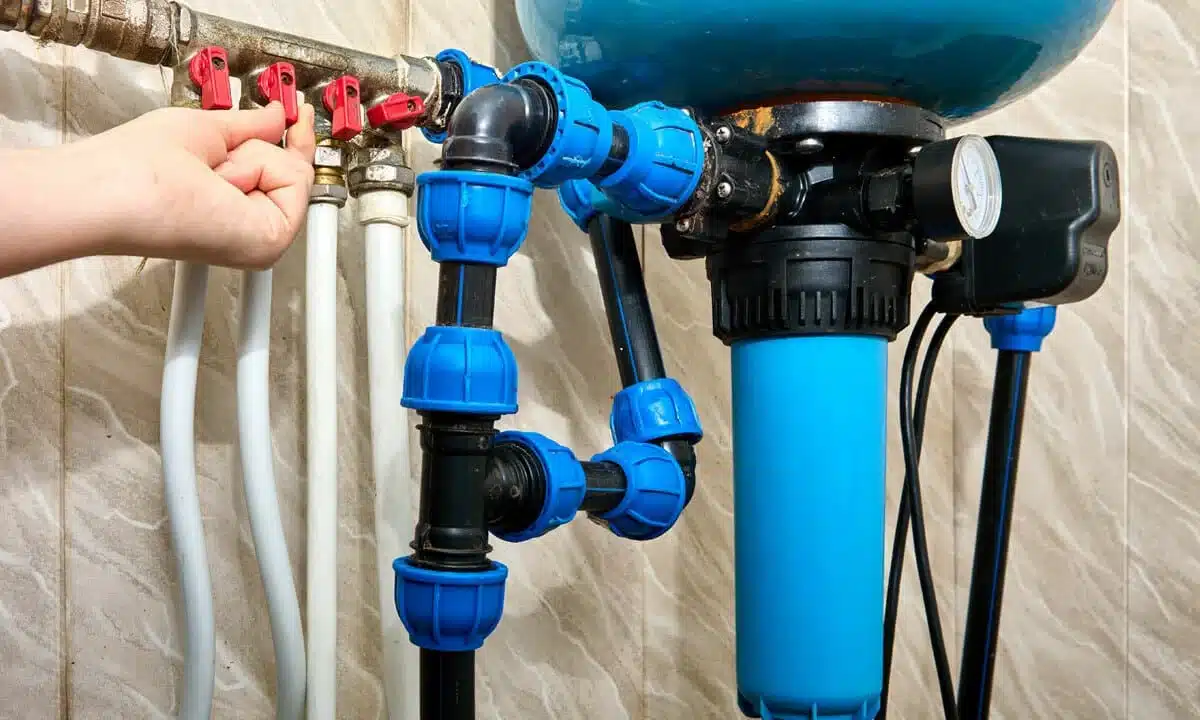
A water filter does its job silently — right up until it doesn’t. When a filter is overdue or has failed, it can quietly stop protecting your water and even make things worse than no filter at all. Knowing how to recognize a bad water filter helps you keep your drinking water clean and your family healthy. The water-quality team at Mainstream Electric, Heating, Cooling, & Plumbing shares the symptoms to watch for and how to handle a replacement.
What a Water Filter Is Supposed to Do
Depending on the type, a water filter removes or reduces sediment, chlorine taste and odor, and a range of contaminants before the water reaches your glass. Carbon filters adsorb impurities onto their surface; sediment filters physically trap particles; reverse-osmosis systems push water through a fine membrane. Every one of these has a finite capacity — once it’s used up, the filter can’t keep doing its job, no matter how clean it looks from the outside.
How to Know If Your Water Filter Is Bad
Whether you have a fridge filter, an under-sink system, or a whole-home unit, the warning signs are similar:
- Bad taste or odor returns — if your water suddenly tastes metallic, earthy, or like chlorine again, the filter media is likely exhausted.
- Noticeably slower flow — a clogged filter restricts water, so a weak trickle from a once-strong faucet or dispenser is a classic sign.
- Cloudy or discolored water — sediment getting through means the filter is no longer catching particles.
- Black specks or particles — deteriorating carbon filters can shed bits of media into your water.
- A change indicator or alert — many fridges and systems track usage and will tell you it’s time.
- It’s simply past its rated life — most filters are rated in months or gallons; if you can’t remember the last change, it’s overdue.
Why a Bad Filter Is Worse Than No Filter
Here is what surprises people: a saturated filter can actually release trapped contaminants back into your water, and a clogged, damp filter becomes a breeding ground for bacteria and biofilm. Once a filter passes its capacity, it stops adsorbing impurities and may degrade water quality rather than improve it. That is why ‘I’ll change it eventually’ is a habit worth breaking — an old filter isn’t neutral, it’s a liability.
How Often Should You Replace a Water Filter?
It depends on the type and your water usage, but general guidelines are:
- Refrigerator filters: every 6 months
- Under-sink carbon filters: every 6 to 12 months
- Whole-home sediment/carbon filters: every 3 to 12 months depending on stage and water condition
- Reverse osmosis membranes: every 2 to 3 years, with the pre- and post-filters changed more often
Homes with hard water or heavy sediment — common across parts of the Inland Northwest — often need more frequent changes. If your water is rough on filters, that itself is a clue worth investigating.
Replacing Your Filter the Right Way
Many drop-in and twist filters are a simple DIY swap — shut off the supply, release the pressure, remove the old cartridge, and install the new one, then run water through it to flush out carbon fines before drinking. But if you are not sure what type of filtration you have, if flow problems persist after a change, or if you want a properly sized whole-home system, professional help ensures it is done right. Our water quality & treatment team can evaluate your setup, test your water, and recommend the right filtration for what’s actually in it.
Types of Water Filters, Briefly Explained
- Sediment filters — physically trap sand, rust, and grit; often the first stage in a multi-stage system.
- Activated carbon filters — reduce chlorine taste and odor and many common contaminants; the workhorse of fridge and under-sink units.
- Reverse osmosis (RO) — push water through a fine membrane for the most thorough filtration, usually at a dedicated drinking-water tap.
- Whole-home systems — treat every tap in the house, ideal when you want consistent quality everywhere.
Knowing which type you have tells you how often to change it and what a ‘bad filter’ looks like for your setup. If you’re not sure, that’s a perfect reason to have your water tested first — you want filtration matched to what’s actually in your water, not a guess.
Can a Clogged Filter Affect the Rest of My Plumbing?
A heavily clogged whole-home filter can drop water pressure throughout the house, not just at one tap. If you’ve noticed weaker pressure everywhere and it’s been a while since a filter change, the filter is a smart first thing to check before assuming a bigger plumbing problem.
Cleaner Water, Done Right
If your water has started tasting or looking off, don’t wait for it to get worse. Explore our water filtration and treatment services or contact Mainstream for help across Spokane and the surrounding area.