
Few things are more frustrating on a hot Spokane afternoon than your air conditioner shutting off and a breaker flipped to the middle. Worse, you reset it and minutes later it trips again. A breaker that keeps tripping is not being dramatic — it is doing its job, protecting your home from a real electrical problem. Here, the HVAC team at Mainstream Electric, Heating, Cooling, & Plumbing explains the most common reasons an AC trips the breaker, plus a few related cooling mysteries we get asked about every summer.
First, Why a Breaker Trips at All
A circuit breaker trips when it senses more current than the circuit is rated to carry. With an air conditioner, that usually means the system is drawing too much power — often because a component is straining, shorting, or failing. Resetting it once is fine. Resetting it repeatedly is not; you risk damaging the equipment and, in rare cases, starting a fire. If it trips a second time, stop and call a professional.
What to Do When Your AC Trips the Breaker
- Turn the thermostat off so the system doesn’t try to restart while you work.
- Go to the electrical panel and check whether the breaker is fully in the ‘off’ or middle position.
- Reset it firmly to ‘on.’ Turn the thermostat back on and wait.
- If it trips again within minutes, leave it off and call for service — repeated resets can cause real damage.
- While you wait, check and replace a dirty air filter; restricted airflow is a surprisingly common trigger.
Common Reasons Your AC Trips the Breaker
- Dirty condenser coil or clogged filter — restricted airflow makes the system work harder and pull more amps. The cheapest fix on this list, and the most preventable.
- Failing capacitor — this component gives the compressor and fan motors their startup jolt. A weak capacitor forces motors to draw excessive current.
- Hard-starting or seized compressor — an aging compressor that struggles to start can spike amperage and trip the breaker instantly.
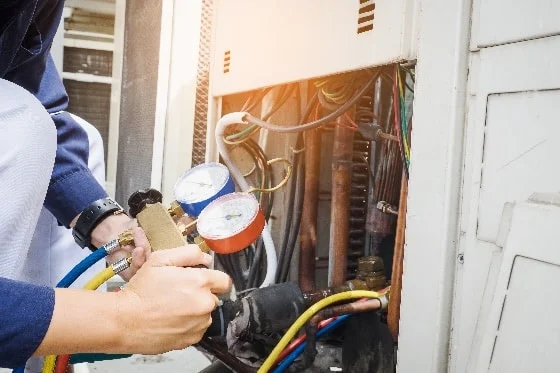
- Low refrigerant and dirty coils causing overheating — heat builds, amp draw climbs, breaker trips.
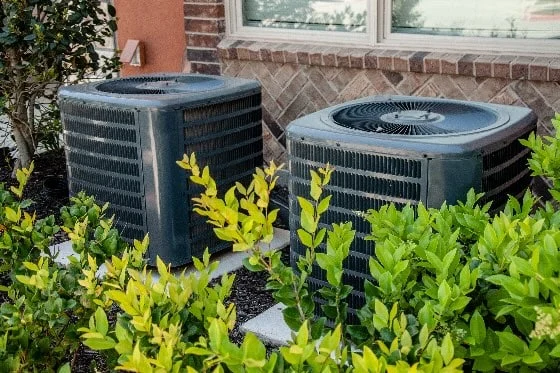
- Failing condenser fan motor — if the outdoor fan can’t shed heat, the compressor overheats and draws more power.
- Electrical faults — loose wiring, a ground fault, or a worn breaker or panel can all cause repeat trips and need a licensed electrician.
Other AC Mysteries: ‘It’s Not Blowing Cold Air’
A breaker trip is not the only summer head-scratcher. If your home AC is not blowing cold air but still running, the usual suspects are a clogged air filter, a frozen evaporator coil, low refrigerant, or a thermostat set to the wrong mode. Sometimes the air feels weak simply because the coil iced over from poor airflow — turning the system off to let it thaw, then replacing the filter, is a smart first step before calling for AC repair. If cold air doesn’t return after a fresh filter and a thaw, it’s time for a technician.
Is Freon Toxic?
Refrigerant (often still called Freon) is generally safe inside a sealed system, but it should never leak. In a well-ventilated home a small leak is unlikely to harm you, but refrigerant can displace oxygen in enclosed spaces and is an environmental concern, so leaks should always be repaired by a certified technician — never simply topped off and ignored. A system that needs refrigerant ‘recharged’ every season has a leak that should be found and fixed. If you suspect a leak, keep the area ventilated and schedule service.
How Long Does It Take to Cool a House After AC Repair?
Once your system is fixed and running correctly, most homes drop a few degrees within the first hour, but fully cooling a warm house on a hot day can take 2 to 3 hours — longer if the house got very warm or if insulation is poor. If your AC runs for hours and never reaches the set temperature, that is a sign the system is still undersized, low on refrigerant, or in need of further service.
Preventing Breaker Trips in the First Place
Most AC electrical problems trace back to strain — and strain is preventable. Change your filter every one to three months, keep the outdoor unit clear of grass, cottonwood fluff, and debris, and schedule annual maintenance so a technician can catch a weak capacitor or low refrigerant before it leaves you sweating in July. A tune-up is far cheaper than an emergency compressor replacement.
Stop Resetting and Start Fixing
If your air conditioner keeps tripping the breaker, don’t keep flipping it back — let our technicians diagnose the real cause before something fails for good. Explore our air conditioning repair or emergency AC repair services. We keep homes comfortable across Spokane and Spokane Valley all summer long.